The Trial (1962)

★ 7.4 1h 59m 550 votes IMDb
Sign in to rate this film

Arrested for an unnamed crime, Josef K. is trapped in a surreal bureaucratic maze where justice is unknowable and guilt is assumed.
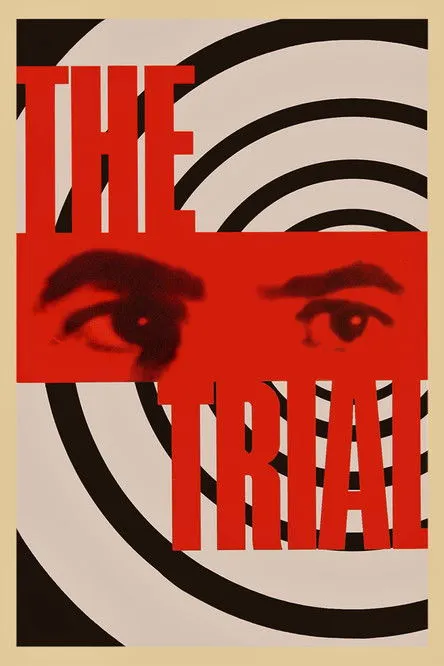
The Trial

Where to Watch

Netflix Netflix Watch
Amazon Prime Video Amazon Prime Video Watch
Disney Plus Disney Plus Watch
Max Max Watch
Hulu Hulu Watch
Paramount Plus Paramount Plus Watch
Apple TV Plus Apple TV Plus Watch
Peacock Peacock Watch
Crunchyroll Crunchyroll Watch
Tubi TV Tubi TV Watch
Pluto TV Pluto TV Watch
Plex Plex Watch

Rent / Buy

Rent

Apple TV Apple TV Rent
Google Play Movies Google Play Movies Rent
Amazon Video Amazon Video Rent
YouTube YouTube Rent
Vudu Vudu Rent
Fandango at Home Fandango at Home Rent

Buy

Apple TV Apple TV Buy
Google Play Movies Google Play Movies Buy
Amazon Video Amazon Video Buy
YouTube YouTube Buy
Vudu Vudu Buy
Fandango at Home Fandango at Home Buy

Cast

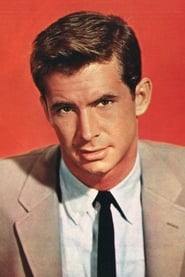
Anthony Perkins
Anthony Perkins as Josef K. Died 1992 · New York City, New York, USA Anthony Perkins (April 4, 1932 – September 12, 1992) was an American actor and singer. He is best known for his role as Norman Bates in Alfred Hitchcock's Psycho and his Oscar-nominated role in Friend...

Jeanne Moreau
Jeanne Moreau as Marika Burstner Died 2017 · Paris, France Jeanne Moreau (January 23, 1928 – July 31, 2017) was a French actress, singer, screenwriter, and director. She made her theatrical debut in 1947, and established herself as one of the leading actress...
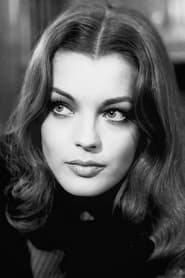
Romy Schneider
Romy Schneider as Leni Died 1982 · Vienna, Austria Romy Schneider (born Rosemarie Magdalena Albach, September 23, 1938 – May 29, 1982) was a German-French actress. She began her career in the German heimatfilm genre in the early 1950s when she was 15....
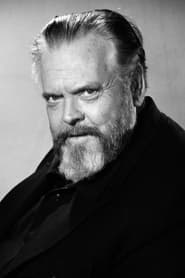
Orson Welles
Orson Welles as Albert Hastler Died 1985 · Kenosha, Wisconsin, USA George Orson Welles (May 6, 1915 – October 10, 1985) was an American film director, actor, theatre director, screenwriter, and producer, who worked extensively in film, theatre, television and radio....
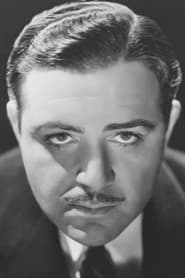
Akim Tamiroff
Akim Tamiroff as Bloch Died 1972 · Tiflis, Russian Empire [now Tbilisi, Republic of Georgia] ​From Wikipedia, the free encyclopedia. Akim Mikhailovich Tamiroff  (Russian: Аким Михайлович Тамиров; 29 October 1899 – 17 September 1972), Tiflis, Russian Empire (now Tbilisi, Georgia) was an Armen...

Elsa Martinelli
Elsa Martinelli as Hilda Died 2017 · Grosseto, Tuscany, Italy Elsa Martinelli (January 30, 1935 – July 8, 2017) was an Italian fashion model and actress. Known for appearing in both European and American films, her popularity peaked in the 1960s when she was con...

Audience Reviews

CinemaSerf 7/10 Nov 06, 2022
There is something really quite terrifying about the scenario in which "Josef K" (a career-best performance from Anthony Perkins, I think) finds himself in this rather sinister thriller. He is awakened one morning to find the police in his bedroom. He is arrested and told he is to stand trial. For what, you might think? Well, that's what he wonders too - and every effort he makes to establish just what he is supposed to have done fails to deliver. His detention is hardly traditional either. He is largely free to come and go as he pleases, provided always that he is available to attend his questioning sessions by those who seem rather arbitrarily charged with deciding his guilt or innocence. As his (and our) frustrations grow, he explores the lives of those close to him - might the source of his predicament lie there? Luckily, his uncle learns of his situation and engages the learned advocate "Hastler" (Orson Welles) - but is he likely to prove an help or an hindrance? This story is Kafka as his very best. Machiavellian scheming mixed with the ultimate in "Big Brother" state manipulation; the disabling lack of information and the increasing exasperation of young "Josef" are successfully transferred onto an audience that shares his fears and apprehensions. Gradually, we learn a great deal about this man, his flaws, foibles and fetishes, but still are uncertain as to just what he is supposed to have done! A considerable degree of the menace here emanates from the dark photography and from an effective supporting cast who excel in perpetuating the mystery, too. Welles directs this with considerable aplomb, Jean Ledrut provides an evocative and mysterious score to accompany a screenplay that delivers the sense of vexation and chagrin well and compellingly. Fans of horror films ought to watch this too - it's one of the scariest films I have ever seen.
CaseyReese 10/10 Feb 08, 2023
.
badelf 10/10 Feb 01, 2025
The Trial: Welles's Brilliant Exposition of Guiltless Guilt

Orson Welles's "The Trial" exists in a lineage of dystopian narratives that includes Kafka's original text of the same name, George Orwell's "1984", and Terry Gilliam's "Brazil" film - all works that explore bureaucratic dehumanization and the absurdity of institutional power.

If the first layer of the film reveals bureaucratic absurdity and inaccessible justice, its deeper strata explore a more insidious human condition: the phenomenon of "guiltless guilt" - an existential state where individuals internalize blame for circumstances beyond their control.

Josef K (Anthony Hopkins) isn't just a victim of an incomprehensible system; he's a subconscious participant in his own psychological prosecution. Welles suggests that guilt isn't an external judgment, but an internal landscape where humans reflexively blame themselves for random misfortunes.

This psychological mechanism echoes broader historical traumas. Like Kafka's prescient writing before the rise of Nazism, Welles exposes how undefined, internalized guilt enables systemic oppression. The nameless accusation becomes a mirror: "Perhaps I deserve this," people whisper to themselves, thus facilitating their own marginalization.

Religious narratives - from Eve's original sin to cultural mythologies of personal culpability - have long programmed this psychological response. We carry lucky charms, we apologize for being victims, we internalize blame as a perverse form of control.

In both "The Trial" and "Brazil", the visual language becomes a physical manifestation of this psychological oppression. Welles's stark, expressionist landscapes and Gilliam's grotesque, mechanical environments aren't mere backdrops, but external representations of internal psychological states. The labyrinthine bureaucracies become metaphors for the human mind's capacity for self-persecution, where architectural complexity mirrors psychological entrapment.

Welles and Gilliam share a crucial insight: systemic oppression isn't imposed from outside, but cultivated from within. Josef K and Sam Lowry aren't just victims; they're unwitting architects of their own psychological prisons. The surreal, nightmarish visual styles become a perfect translation of this internal landscape of "guiltless guilt" - where the most effective chains are the ones we forge for ourselves.

"The Trial" is less a film about justice than a profound exploration of how humans psychologically prepare themselves for, and participate in, their own oppression.

Similar Movies